By Baklinski Home Improvement · November 25, 2026
Around here a cold snap is usually a few nights, not a season. NOAA's 1991–2020 climate normals for Sea-Tac airport show about 25 nights a year at or below freezing, most of them from December through February, and only about one day a year when the high stays at 32°F or below. In half of years, Sea-Tac's first freezing night has come by about November 23, so freezing nights can start any time now.
Because it doesn't happen often, most of us don't think about pipes until a tap stops running. When a hard freeze does come, the pipes that split tend to be the same few, sitting in cold air where nobody looks.
Where pipes freeze in Puget Sound houses
Seattle Public Utilities names the usual spots: pipes in attics, basements, crawl spaces and garages, pipes running against exterior walls, and the place where the water line comes through the foundation. Outside faucets and hoses are on that list too.
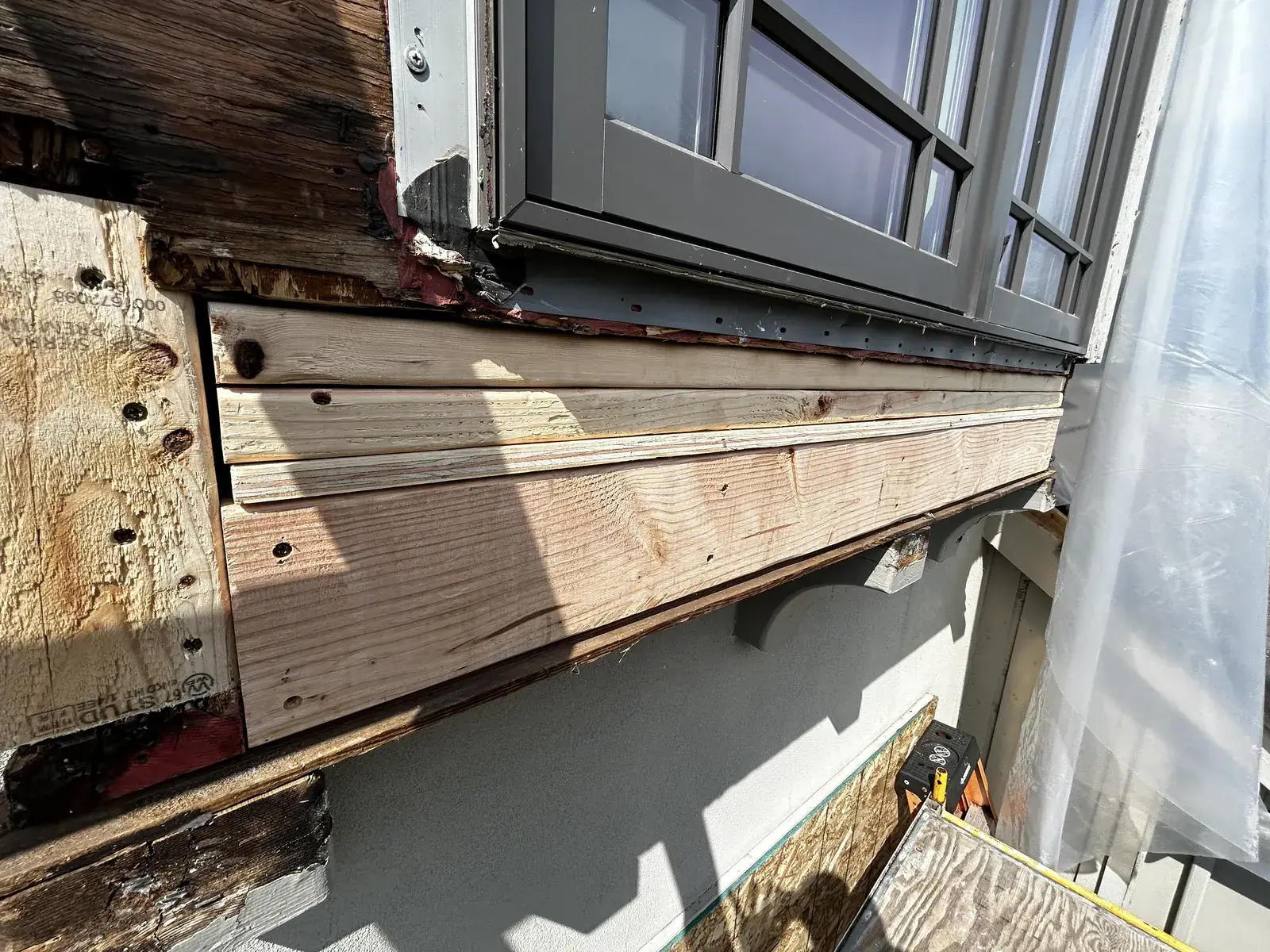
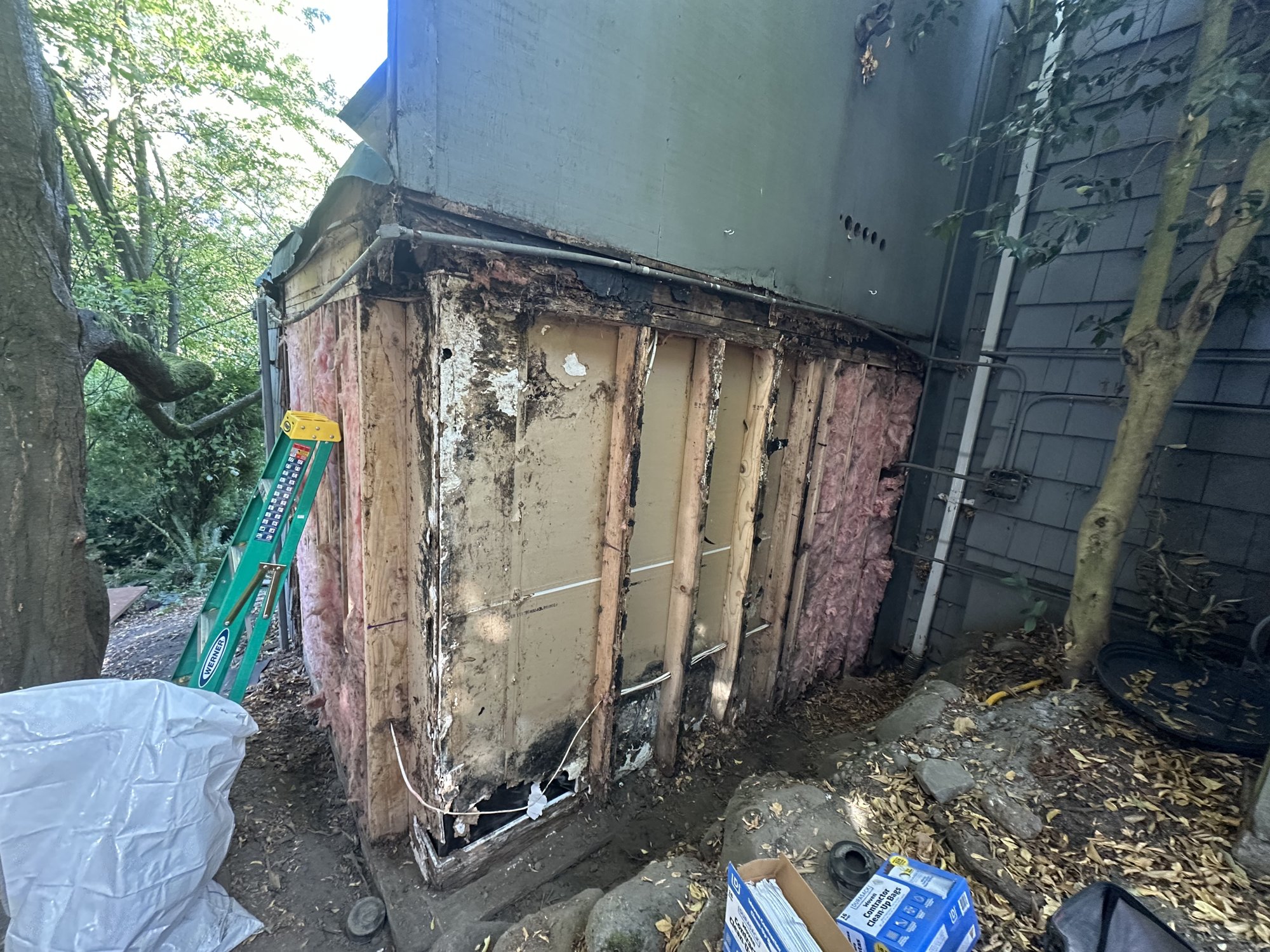
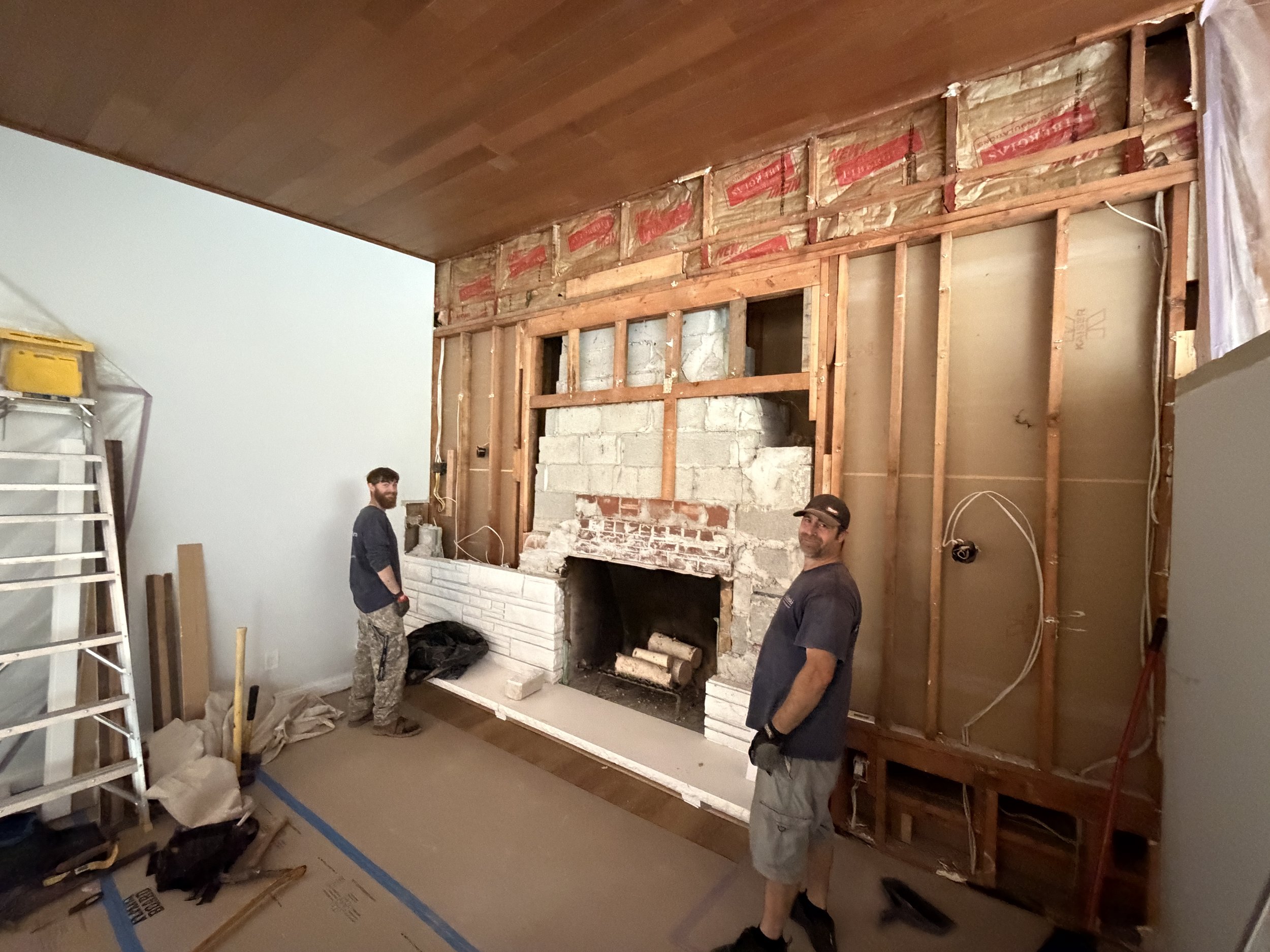
That lines up with what we find when we open houses up. On a Mercer Island bathroom and laundry remodel, we opened an exterior wall and found old plank sheathing and an empty stud bay. No insulation at all. Anything plumbed into a wall like that has a layer of boards between it and the weather.
Crawl spaces are the other big one. In a lot of houses the water lines run under the floor, past foundation vents that stay open all year. The insulation sags off the floor framing, and the plastic on the ground gets dragged around by whoever was down there last. SPU says pipes exposed to drafts from open foundation vents are the most at risk of freezing or splitting. The crawl space section of our winter rain checklist covers what to look for.
Before the cold comes
Find your main water shutoff now, while nothing is leaking. SPU says it's usually in a basement, crawl space or garage. Make sure it turns. A seized valve is better found in November than at two in the morning.
Outside, drain and put away the hoses. If the outside faucets have their own shutoff inside the house, close it, then open the faucets outside so the lines empty. If there's no separate shutoff, cover the hose bibs. Shut off and drain an in-ground sprinkler system the way the manufacturer says to.
Inside, wrap pipe that runs through unheated space (attic, crawl space, garage) with pipe insulation, following the product's instructions. Caulk around pipes where they come through the wall to the outside. For the cold stretch, SPU suggests closing the foundation vents by sliding cut wood or foam blocks into the openings, then taking them out again in spring so the crawl space can dry out.
On the coldest nights
SPU's advice here is simple. Open the cabinet doors under sinks that sit on exterior walls so house heat can get to the pipes. In severe cold, let one indoor faucet drip cold water, the one farthest from your front door. Keep the thermostat at 55°F or higher, day and night, even if you're away. Don't leave water running in a building nobody's in.
If a pipe freezes
If you turn on a tap and get a trickle or nothing, suspect a frozen pipe. Look first at pipes on exterior walls and where the service line comes in through the foundation. Leave the faucet open. Warm the frozen section with towels soaked in hot water, an electric heating pad or a hair dryer, and keep at it until full pressure comes back. Don't use anything electric if there's standing water.
No torches, no propane or kerosene heaters, no open flame of any kind. SPU warns that a blowtorch can boil the water inside a frozen pipe and make it burst, on top of the fire and carbon monoxide risk. If you can't find the frozen spot, can't reach it, or can't thaw it, call a licensed plumber. Then check your other faucets, because if one pipe froze, others may have too.
If a pipe bursts
Close the main shutoff right away. If you're on Seattle's water and can't get the main closed, SPU customers can call (206) 386-1800 any hour, and a crew will shut the water off at the meter for a service charge. Other cities and water districts have their own emergency lines, so look yours up before you need it. Then get a plumber in to repair or replace the broken section.
After the pipe is fixed, the wet ceiling or wall is where we come in. We open it up and check the framing for mold before anything gets patched. On one Seattle ceiling the framing was sound with no mold, so it went straight to patching, texture and paint. A water-stained ceiling after the leak is fixed is usually a handyman visit. A repipe is a remodel.
What we fix when the walls are open
Washington's plumbing code, the Uniform Plumbing Code as the state amends it, says in section 312.6 that water, soil and waste pipe can't go outside the building, in attics or crawl spaces, or in an exterior wall unless it's protected from freezing where that's necessary. The state adds that hot and cold water pipe outside conditioned space has to be insulated to the Washington State Energy Code minimums. A lot of the houses we work in were plumbed long before anyone held them to that.
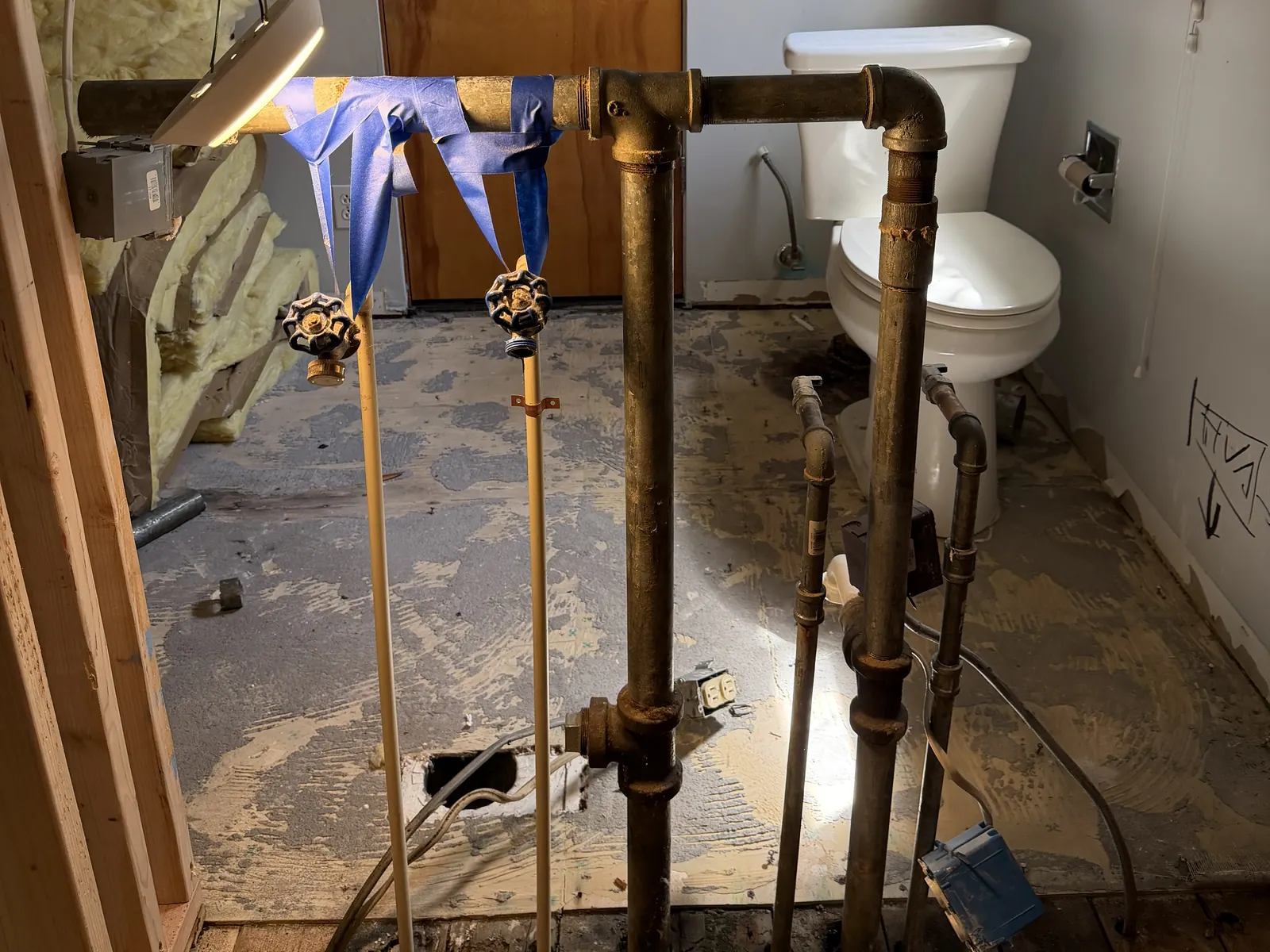
The best time to deal with it is when a remodel already has the walls or floor open. On that Mercer Island job, the supply lines were old galvanized steel with some CPVC mixed in. Galvanized corrodes from the inside. We've cut into old lines that were 80 or 90 percent closed with rust, with just a narrow channel left for the water. The CPVC was fragile, and it breaks easily. We took the whole run out and replaced it with PEX before any finish work went in. You can see that job in our galvanized-to-PEX repipe.
In the same house we moved the dryer vent down through the crawl space and out the side of the house. We insulated it where it passes through cold space, so the hot, damp air wouldn't condense in the duct. That's the dryer vent story. Water lines work the same way. Whatever has to run through cold space should be routed and protected for it, and the easiest time is while everything is open.
If you want someone to look
If you've got a crawl space you haven't been into, a hose bib that's split before, or a sink on an outside wall that runs slow on cold mornings, call a BHI rep at (206) 681-6634, or visit baklinski.com. We work on houses in Mercer Island, Seattle, Bellevue and Kirkland, and a bare pipe is much easier to find now than after it splits.
Scope
Where pipes freeze in Puget Sound houses, and what to do before and during a cold snap
Projects
Mercer Island galvanized-to-PEX repipe and dryer vent reroute; Seattle ceiling repair
Source
Seattle Public Utilities; NOAA 1991-2020 normals (Sea-Tac); WA UPC 312.6
Market
Greater Seattle
Every Baklinski project carries a 1-year warranty and direct access to Andrew & Niki, start to finish. We treat your home like our own.